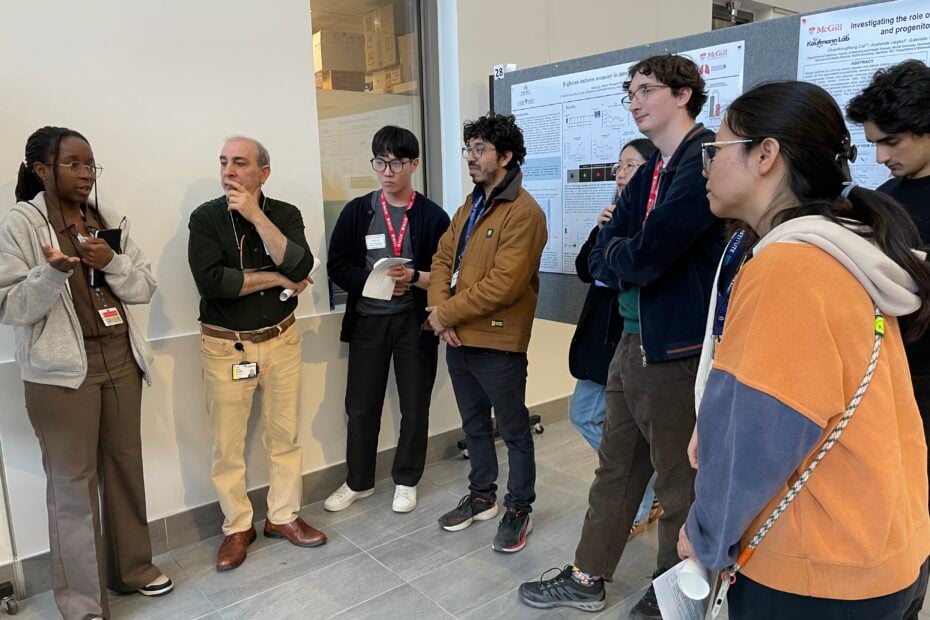
The 35th Respiratory Research Day featured 42 oral and poster presentations. Thank you to all our participants for attending and presenting your research projects. It was wonderful to see all the hard work and dedication that went into your presentations. Thank you for helping make the event a success.
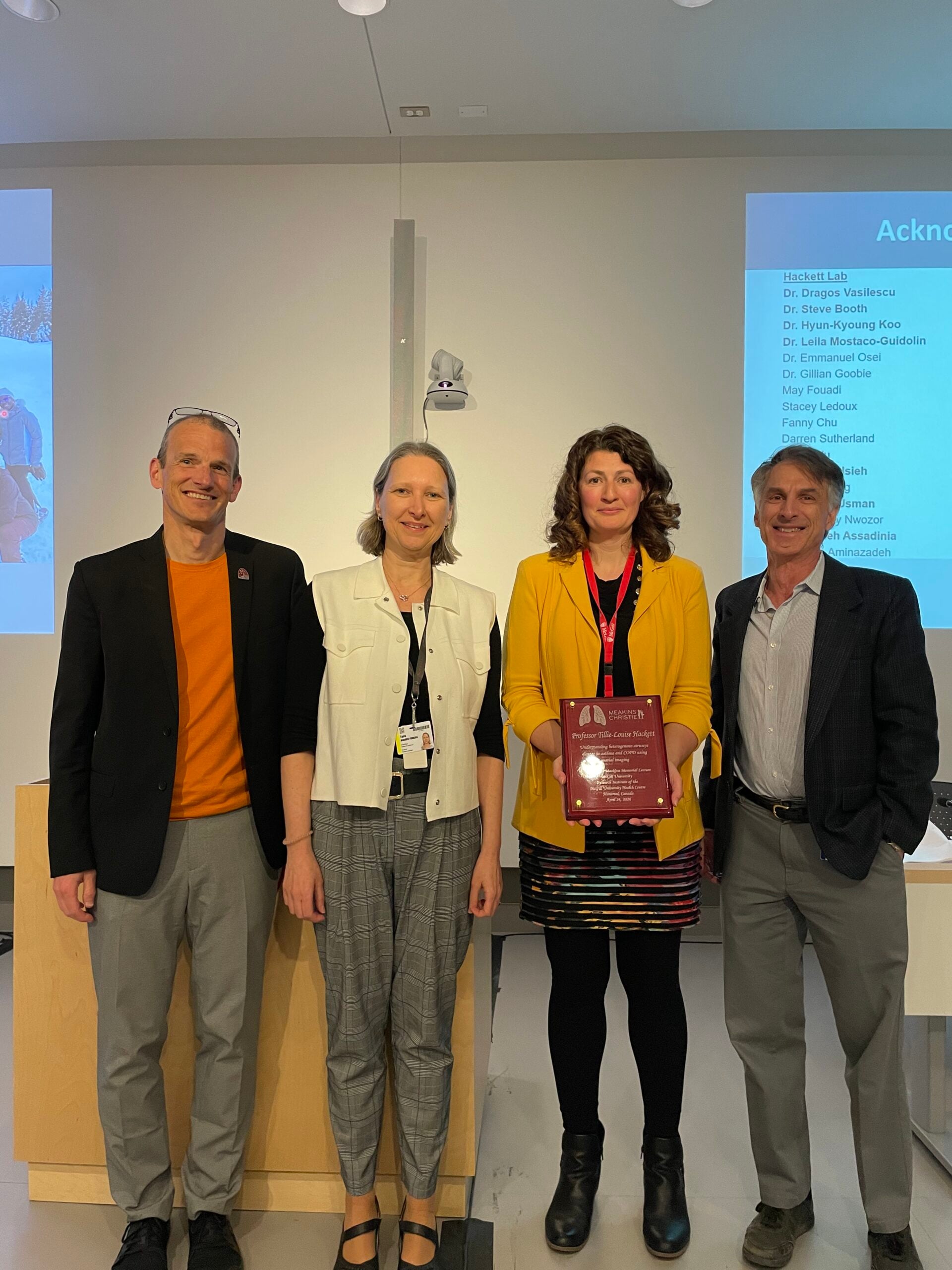
We were especially pleased to introduce a few new elements this year, including the rapid-fire presentations and the panel discussion featuring early-, mid-, and senior-career PIs interviewed by students, both of which brought great energy and valuable perspectives to the program. A highlight of the day was the keynote by Dr. Tillie-Louise Hackett, Peter T. Macklem Lecture: Understanding Heterogeneous Airways Disease in Asthma and COPD Using Spatial Imaging, which sparked some excellent discussions.
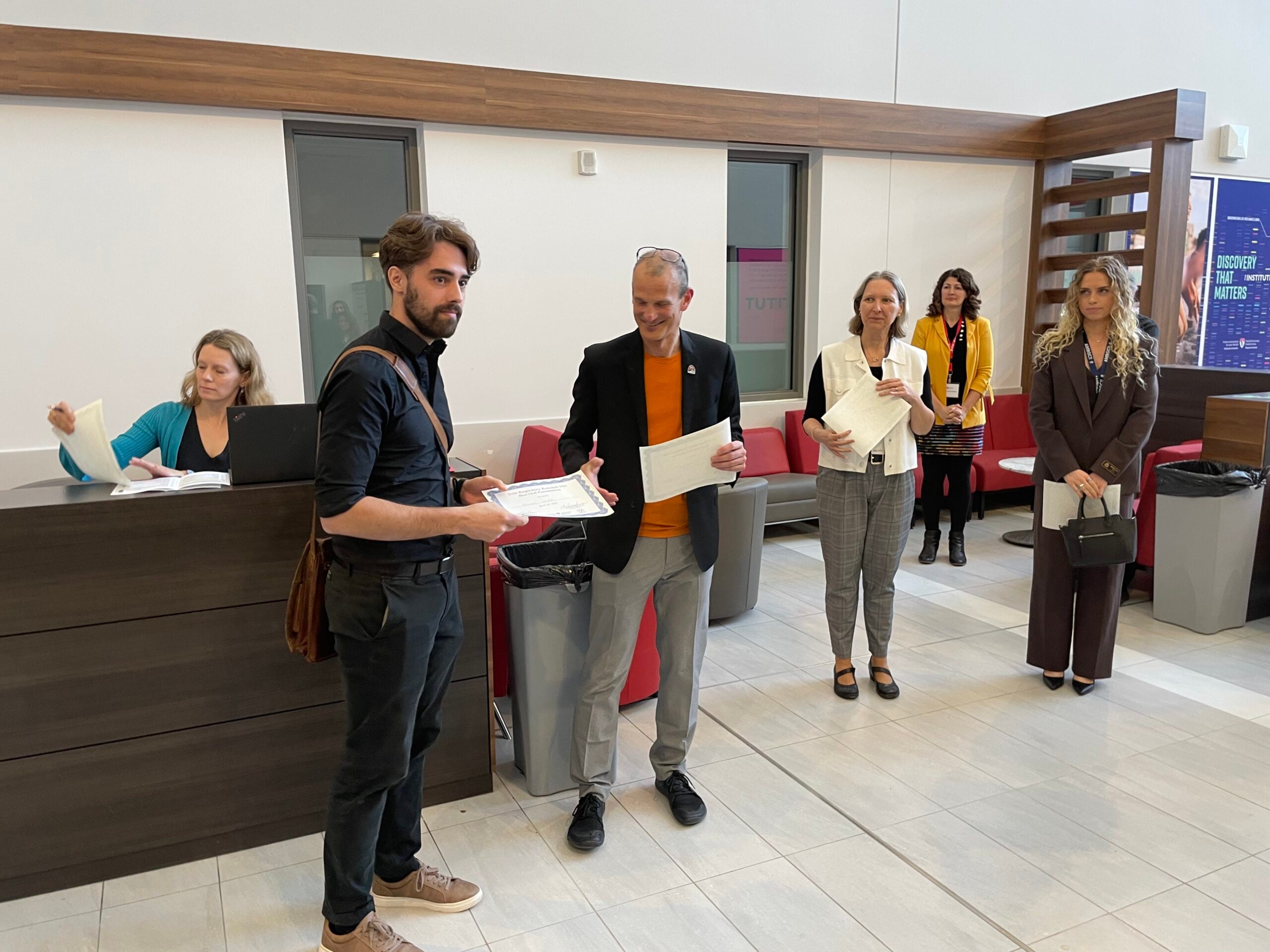
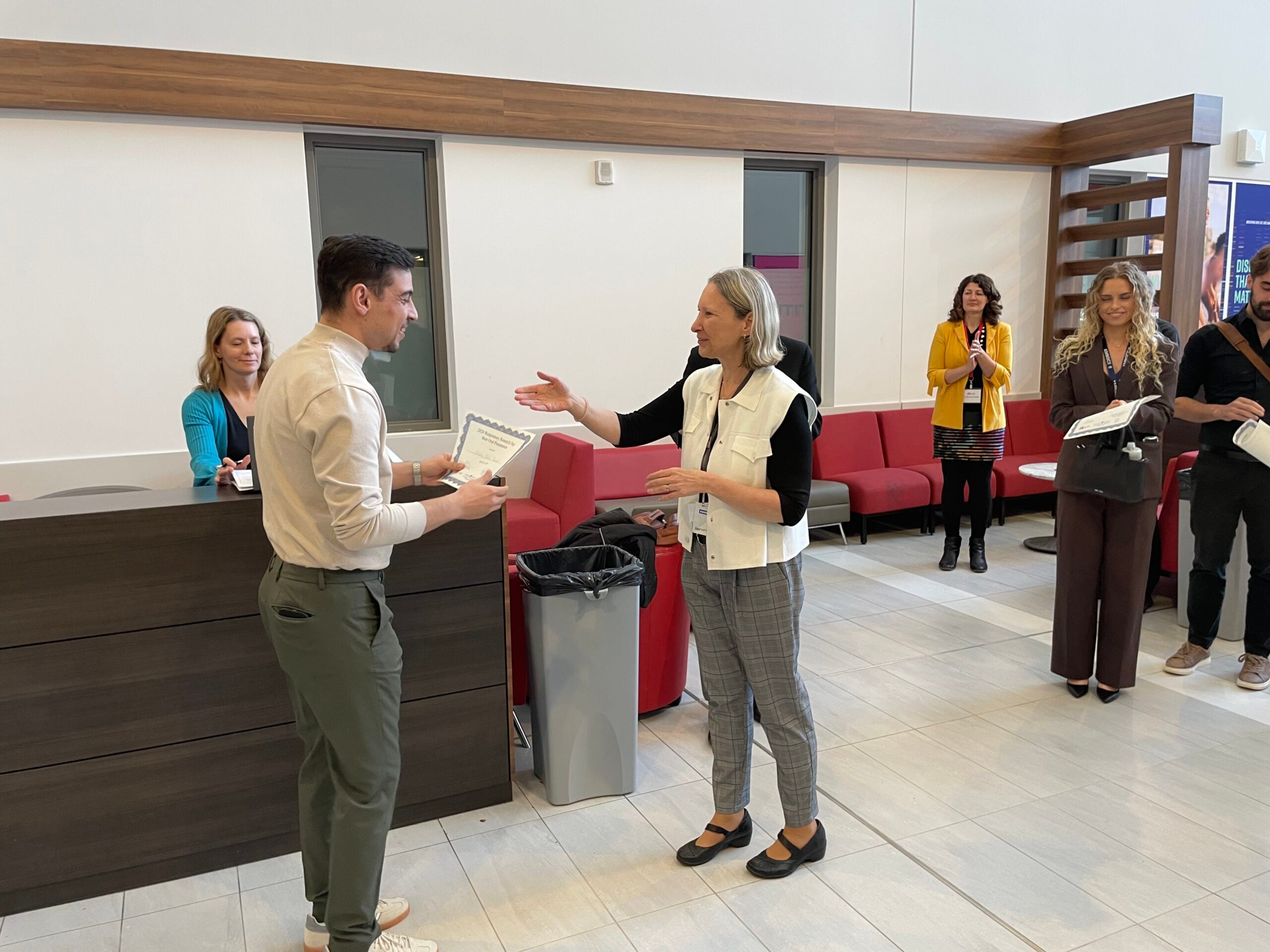
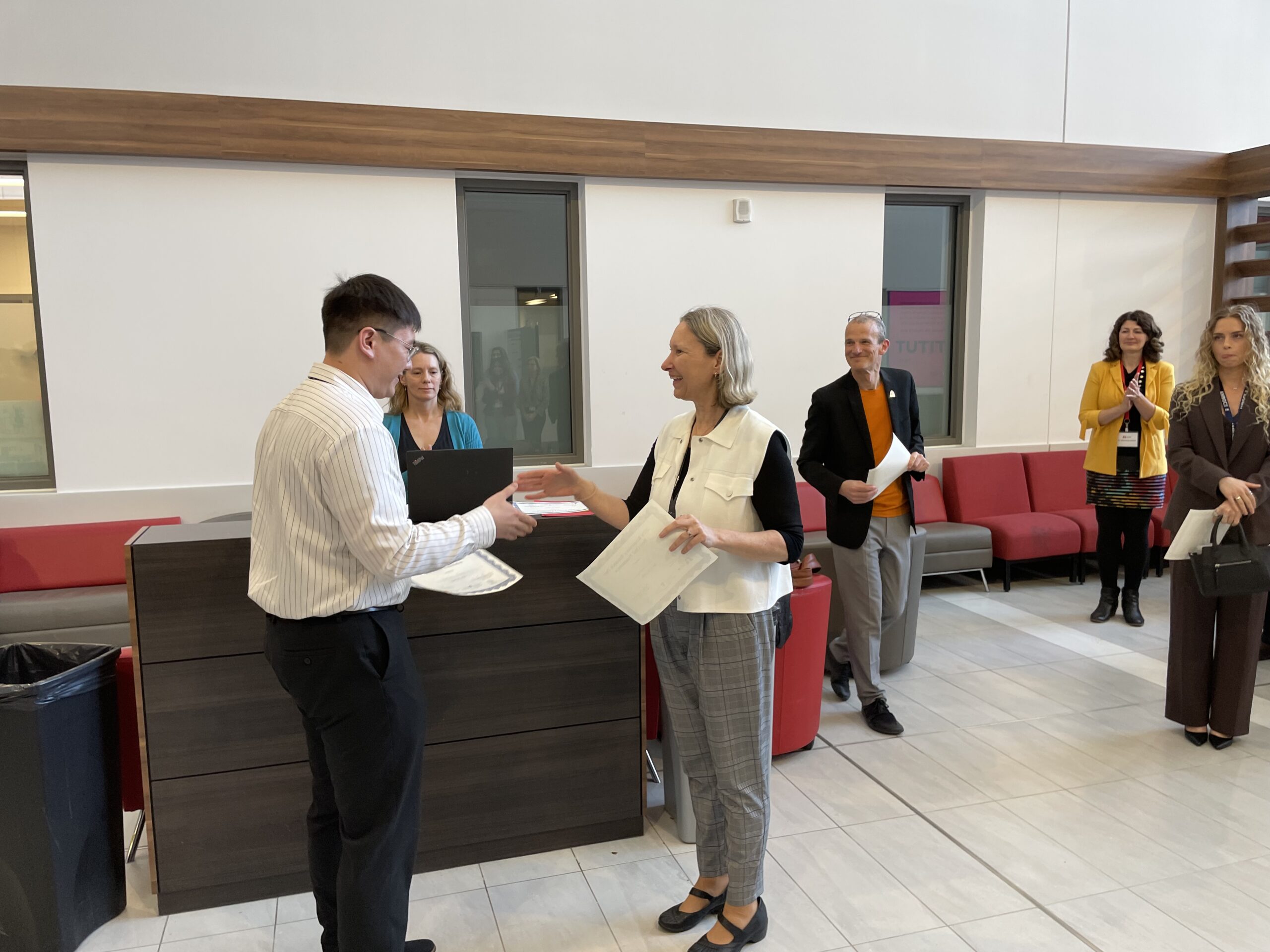
The winners for best oral presentation were:
Ryann Lang
PhD student with Basil Petrof
Elucidating the Role of Interleukin-6 in Ventilator-induced Diaphragm Dysfunction
Olivier Salko
Resident with Nicole Ezer
Benralizumab for Early Stage Lung Cancer with Eosinophilia trial -BELE trial – Improving post-operative lung cancer resection outcomes with eosinophil guided anti-IL-5 therapy – A Bayesian Adaptive feasibility study
The winners for best rapid fire oral presentation were:
Shahin Bolori Hanafi
PDF with Maziar Divangahi
IL-22 Mediated Autophagy in Alveolar Type 2 Cells Promotes Pulmonary Disease Tolerance to Influenza
Kriti Agarwal
PhD with Tania-Janaudis Ferreira
Six-month follow-up of a randomized controlled trial on tele-rehabilitation in individuals with long COVID
The winners for best poster presentation were:
Hansen Feng
MSc with James Martin
Characterization of the intrapulmonary antiviral immune response to oropharyngeal influenza A virus infection during pregnancy
Willem Rijnbout St James
PhD student with Carolyn Baglole
The Aryl Hydrocarbon Receptor is a Novel Regulator of ECM Synthesis and Focal Adhesion Dynamics in Lung Fibroblasts
Rui Sun
PDF with Maziar Divangahi
15-lipoxygenase is essential for hematopoietic stem cell functions and β-glucan-mediated trained immunity against influenza A virus
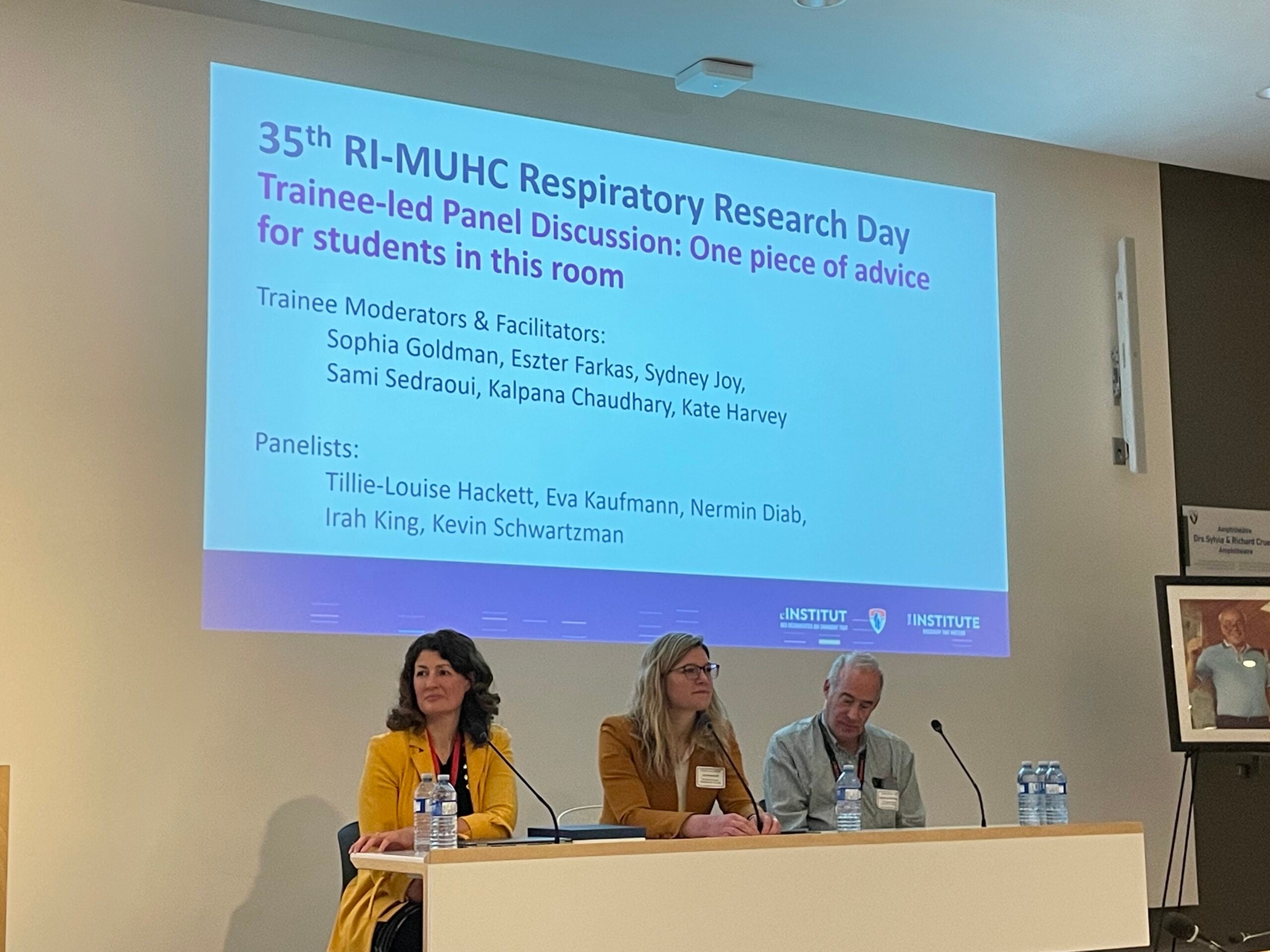
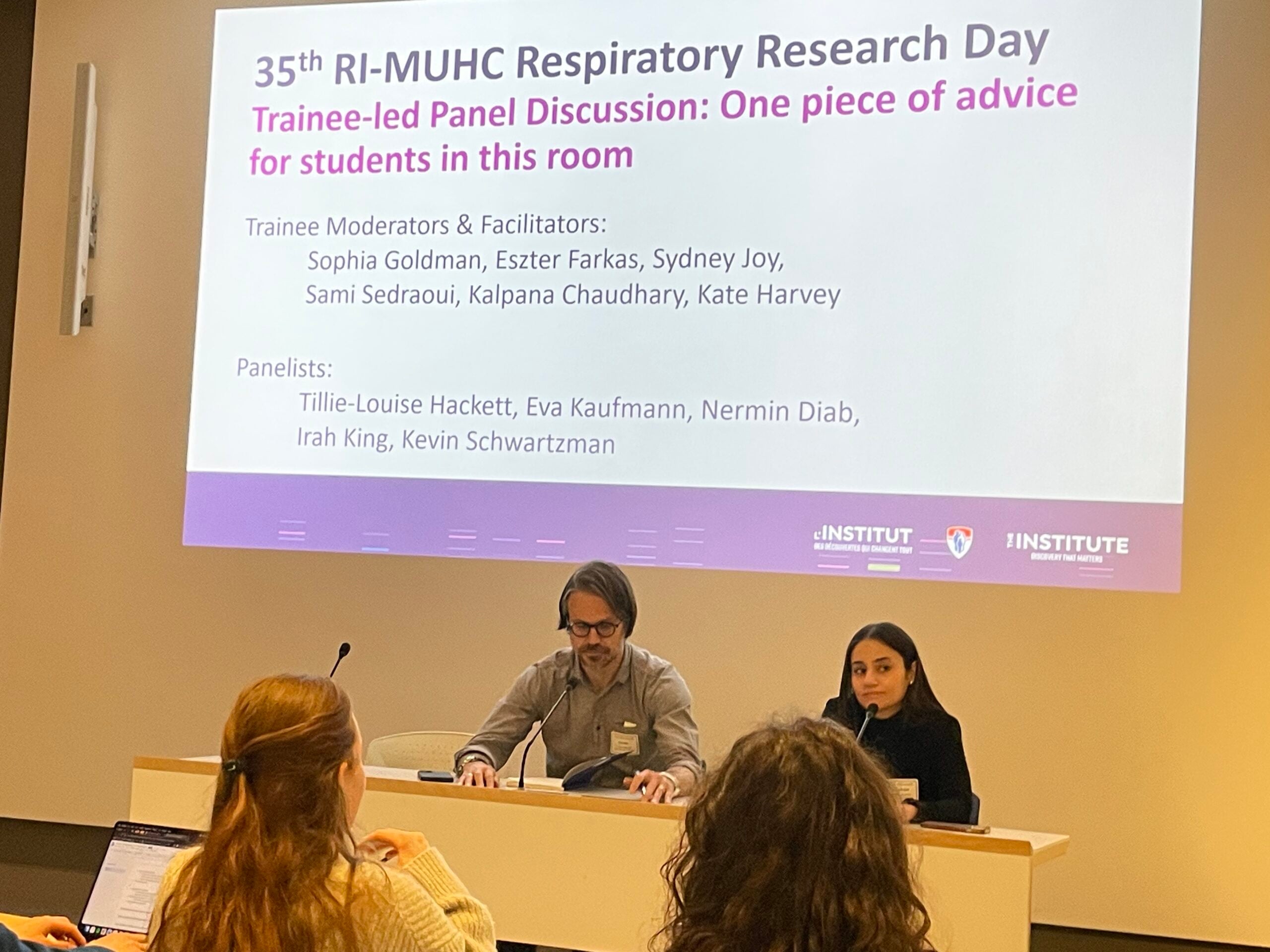
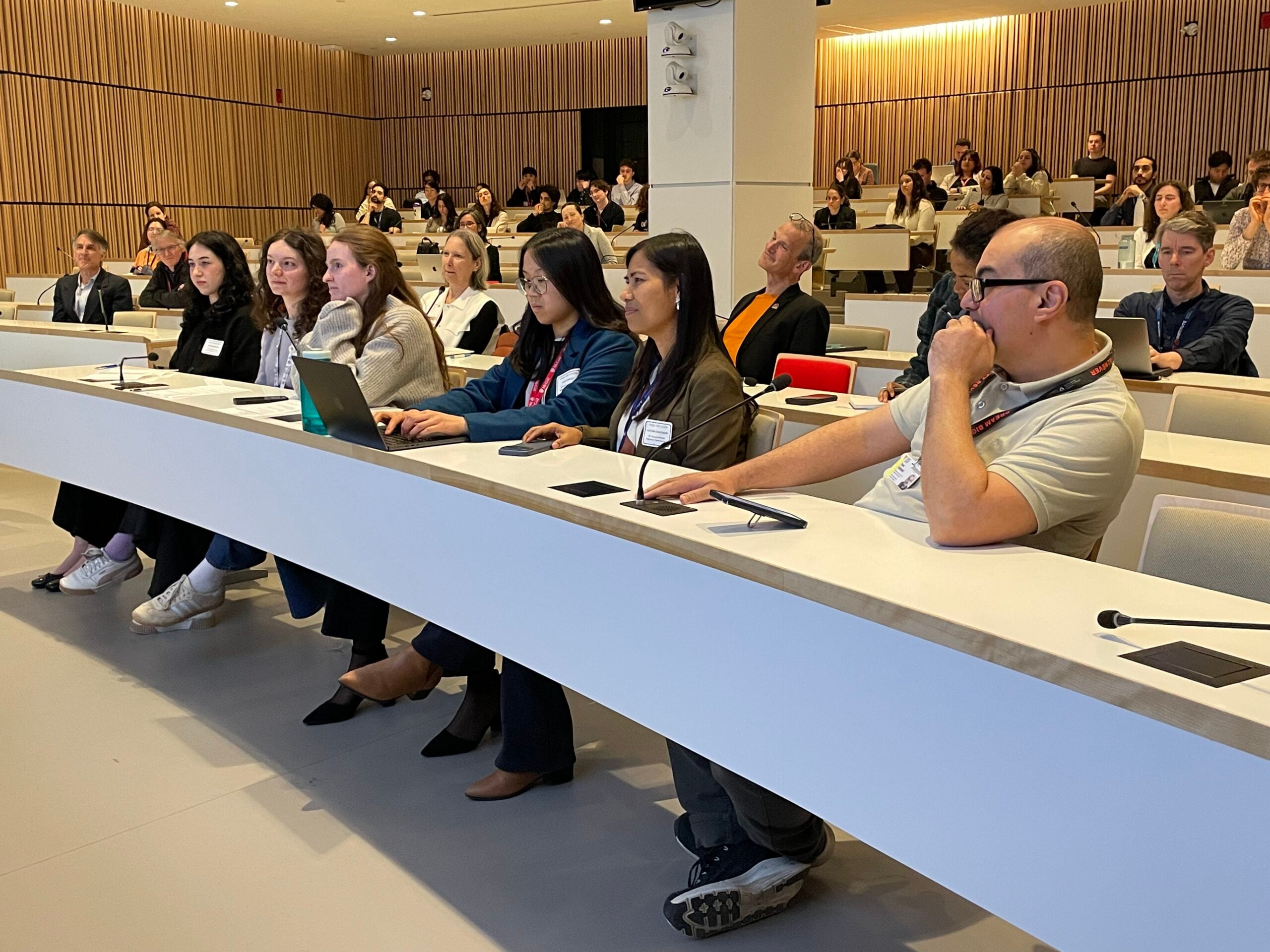
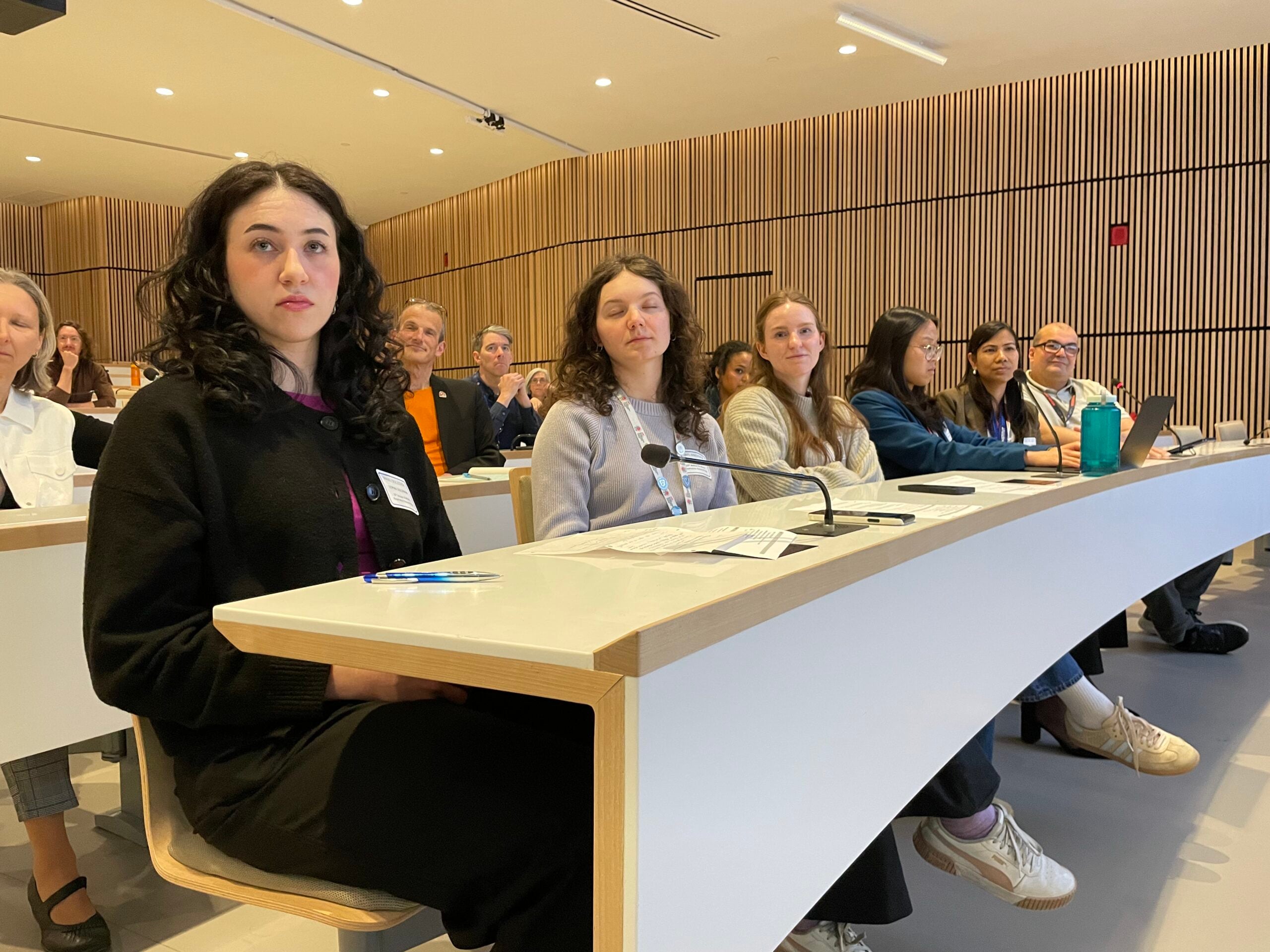
Trainee-led Panel Discussion:
One piece of advice for students in this room
Trainee Moderators & Facilitators: Sophia Goldman, Eszter Farkas, Sydney Joy, Sami Sedraoui, Kalpana Chaudhary, Kate Harvey
Panelists: Tillie-Louise Hackett, Eva Kaufmann, Nermin Diab, Irah King,
Kevin Schwartzman
As part of this year’s Research Day, trainees led an interactive panel discussion featuring faculty researchers and our keynote speaker, creating a space for open, honest conversations about career paths, mentorship, and life in academia.
From the very first question “How did you decide your career path?”, one message came through clearly: there is no single path into science. Panelists shared journeys shaped by curiosity, unexpected pivots, and influential mentors. Some discovered their passion early, while others found their direction much later, often after changing fields entirely. The common thread? Follow what excites you and be open to change along the way.
Choosing Academia: Freedom, Curiosity, and Personal Fit
When asked what drew them to academia, panelists emphasized the freedom to explore ideas and shape their own research programs. At the same time, they highlighted that academia is not the only path, and that choosing between academia and industry is ultimately a personal decision, shaped by individual priorities and interests.
Mentorship Matters – And It Goes Both Ways
A major theme of the discussion was the importance of strong mentor–trainee relationships. Panelists described mentorship as more than supervision; it’s about advocacy, honesty, and aligning with a trainee’s long-term goals. Trainees were encouraged to actively communicate their expectations and seek out mentors who support both their professional and personal growth.
Lessons Learned (Sometimes the Hard Way)
Panelists also shared candid reflections on challenges they faced during training. A key takeaway: don’t ignore problems but rather address them early. Whether it’s a difficult mentorship dynamic or uncertainty about career direction, being proactive can make a significant difference.
Another recurring message was the importance of taking ownership of your work: driving your project forward, developing your own ideas, and building essential “soft skills” like writing, communication, and organization.
Beyond Publications: What Really Matters for Academic Careers
During the audience Q&A, trainees asked how to stand out in academia beyond publishing papers. Panelists emphasized: building connections and visibility within your field, developing strong communication and storytelling skills; thinking beyond your current project to identify the next big question. Ultimately, success isn’t just about a CV, it’s about your ability to communicate your vision and make others care about your work.
The Reality of Academic Life
In a refreshingly honest exchange, panelists acknowledged the less glamorous side of academia: administration, emails, and competing responsibilities. Their advice: prioritize wisely, set boundaries, and accept that no role is perfect. At the same time, they encouraged trainees to embrace uncertainty, learn from mistakes, and seek guidance from more experienced colleagues.
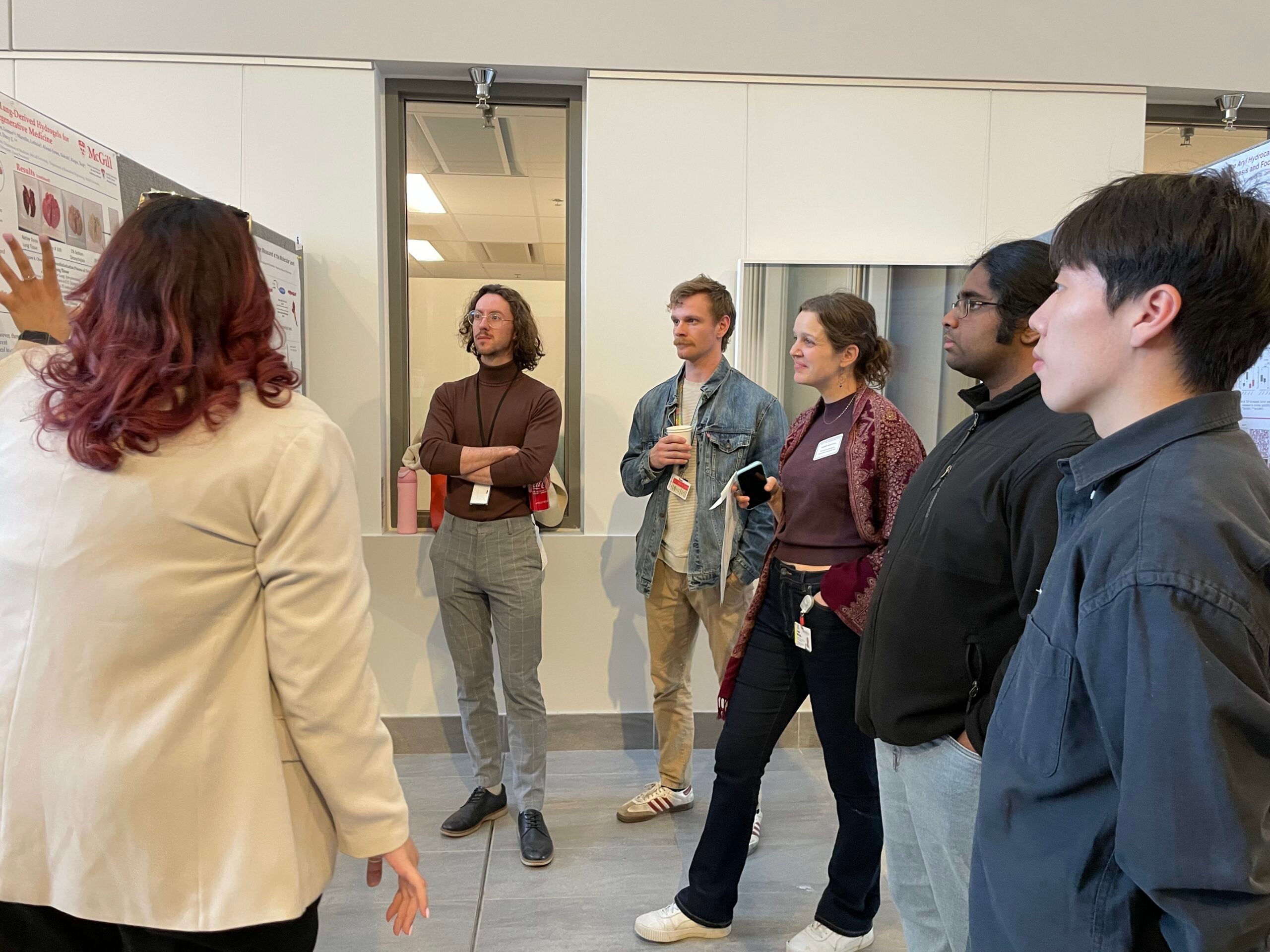
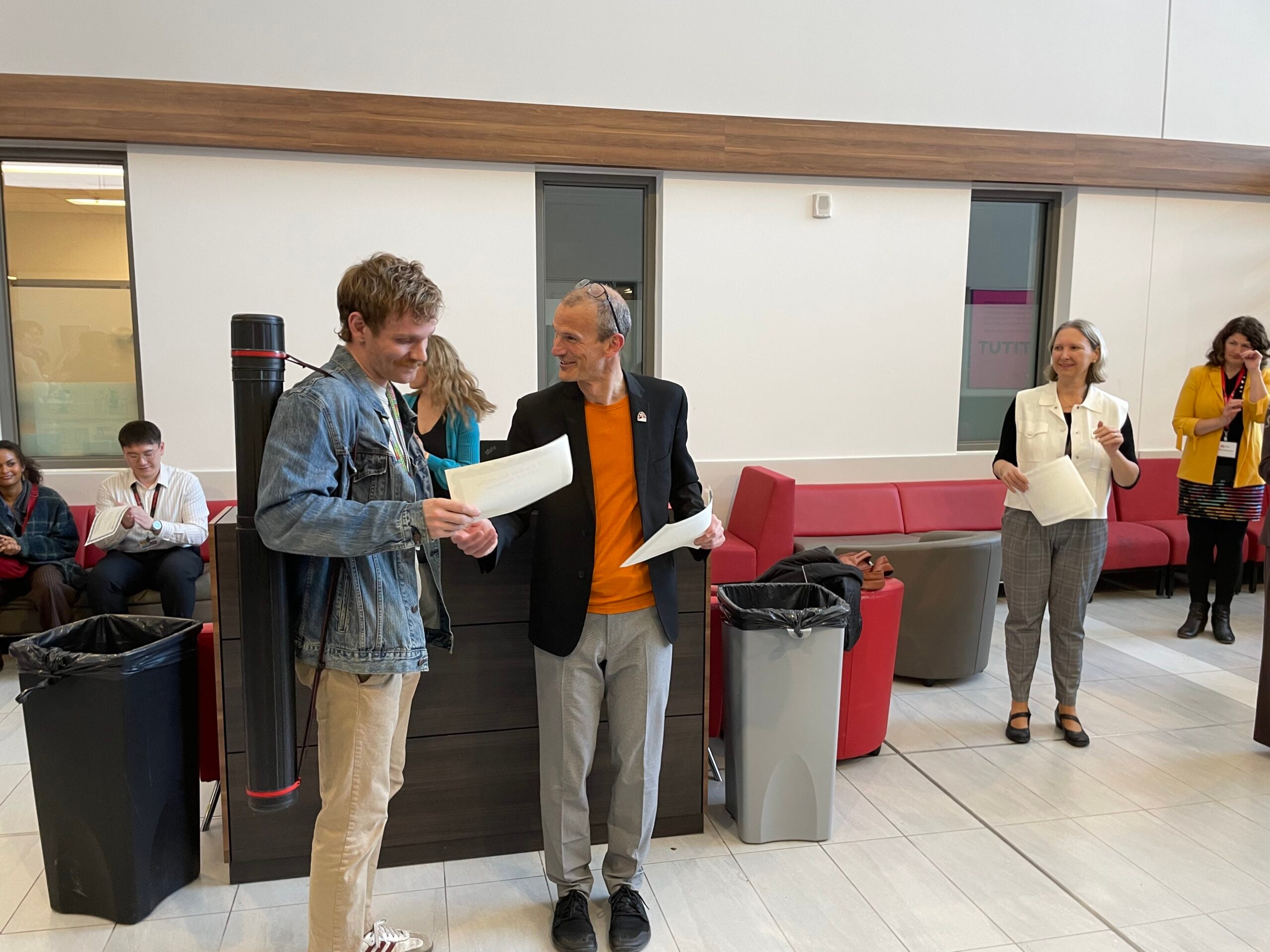
Photos from the Event
Read More
From the lab to the clinic: Spring Research Days showcase The Institute’s scientific momentum. Spring 2026 events united researchers, clinicians and trainees across disciplines to push the boundaries of discovery and deepen The Institute’s commitment to precision health. The Institute News. June 3, 2026.